


Planting and hidden history along the Cambrian

A couple of weeks ago I hopped on the train for a day catching up with Transport for Wales (TfW) Station Adopters and was planning on meeting Mel and Sian from TfW in Borth. I arrived early and was welcomed by George and Jo, who made me a mug of tea and filled me in on their news while we looked at their planters and sat on the platform.
George and Jo are long‑standing TfW Station Adopters and curators of the Borth Station Museum. While we waited, a new train rolled slowly into the station; we waved to the driver, and he waved back before continuing to Aberystwyth. It was nice to see 197 practice runs on the line.
Back on the platform, George was chatting to a couple of people who were checking train times. Before I’d finished my tea, Mel and Sian arrived with trays of plants for the station. Under Jo’s supervision, we filled the planters and then stood back to admire the effect.
Once Mel and George had caught up with all things Borth, we jumped into the van and trundled up to Tonfanau to meet Station Adopters, Gill and Steve. They’d had a new self‑watering planter installed, so we unloaded compost, grit and more wind‑hardy plants.
I’m not sure which is the windiest place on the Cambrian, every station seems to have its gusts of varying degrees, but the views of the mountains and the sea are, in my opinion, some of the most beautiful in the UK. Borth had been breezy, but Tonfanau felt breezier. Gill knew which direction the wind usually came from and planted accordingly.
Looking around Tonfanau, I noticed many derelict buildings on both sides of the line. Sian mentioned she’d heard it was once a military base. Back at the office I looked it up and found that Tonfanau was indeed a large army camp from the late 1930s through the 1960s, later reopening briefly in the 1970s to host refugees from Uganda. It once housed hundreds of personnel and included extensive facilities; today much of it remains as ruins, a fascinating and poignant piece of local history and I will be looking into it further. (Source: historypoints.org)

We jumped back in the van and drove a few miles to the next station, Llwngwril, to be planter fairies. Pam and Sue weren’t around, so we unwrapped the new planter, put it in position and planted it up.
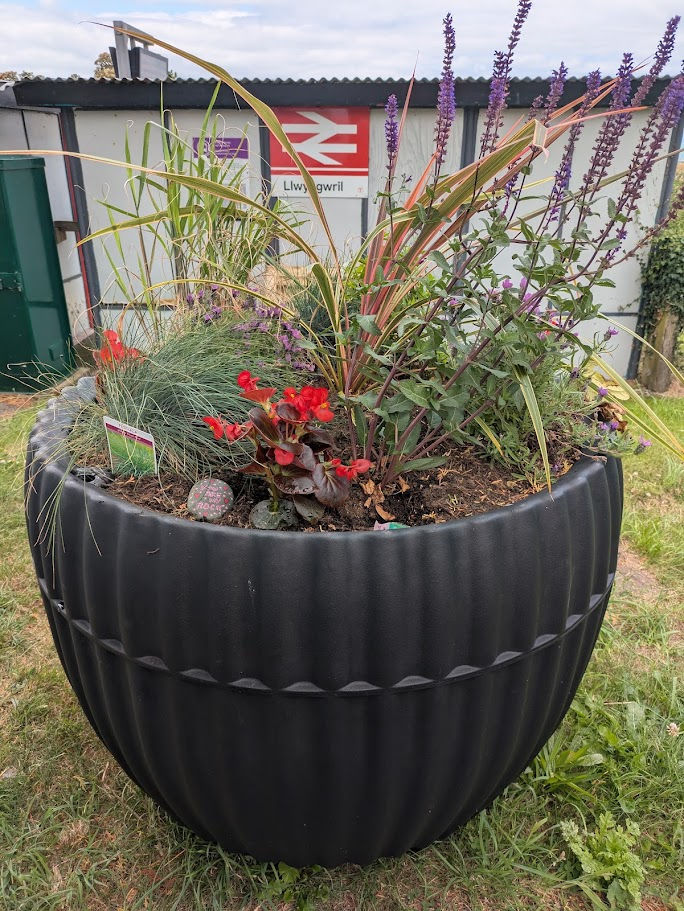
I then sat and waited for the train back to Newtown while Mel and Sian set off back for north Wales. It had been a busy, windy and very satisfying day with good company, lots of planting, and a reminder of the hidden histories that sit beside our railway lines.


Comments